Font copyright law is one of those topics that seems simple until you try to apply it. A typeface can look highly distinctive, a font file can be licensed like software, and a brand may rely on a particular visual style for years. Yet the legal protection for each of those things is not necessarily the same. Add generative AI to the process, and questions such as “is font generation copyright?” or “can AI recreate a font legally?” become even harder to answer with a simple yes or no.
The most useful starting point is this: laws typically distinguish between the visual design of letterforms, the digital font software that produces them, the name and branding associated with a font, and the specific creative work created by a human or an AI system. These categories can overlap in a real-world project, but they are governed by different legal principles.
This guide explains the practical foundations of font copyright AI questions without treating every font-related concern as a copyright issue. It is general educational information, not legal advice; font law varies by jurisdiction, the facts matter, and high-stakes commercial use should be reviewed by a qualified intellectual-property attorney. Still, understanding the distinctions below will help designers, founders, agencies, and developers make far better decisions before downloading, modifying, training, or generating a font.
What Copyright Protects in Fonts
The font file is often protected even when the typeface design is not
The central source of confusion is that people use the word “font” to mean two different things. In everyday conversation, a font may mean the visual style of the alphabet: the shapes of its A, g, ampersand, numerals, and punctuation. In technical and legal terms, a font can also mean the digital file—such as a .TTF, .OTF, WOFF, or variable-font file—that contains instructions for rendering those shapes.
In many jurisdictions, especially under the common U.S. approach, the digital font program is capable of copyright protection as computer software. Its outlines, hinting data, kerning tables, OpenType features, code, and other implementation details can reflect protected authorship. Copying a commercial font file, extracting its glyph data, converting it to another format, or distributing a substantially identical clone can therefore create copyright and license problems even if the letterforms themselves are not protected by copyright in the same way.
Licensing creates another layer. When someone purchases or downloads a font, they normally receive permission to use the file under an end-user license agreement, not ownership of all intellectual-property rights. A desktop license may permit use in print and static graphics but prohibit embedding the font in an app. A webfont license may be priced by page views. A license may allow a company’s internal staff to use the font but prohibit sharing it with outside contractors. These restrictions are contractual, which means they can matter independently of copyright.
For practical purposes, assume that a font file is not public-domain simply because it is easy to copy. Before using a file, check its source, license terms, permitted users, allowed platforms, modification rights, and redistribution rules. This is an essential part of managing font intellectual property, particularly for products that ship font assets to customers or embed them in software.
Other rights may also enter the picture. A font family name can be protected as a trademark or function as a source identifier in some contexts. A foundry’s logo, specimen book, marketing copy, and custom icons may be separately copyrighted. In certain countries, registered design rights or design patents may protect aspects of a typeface design. The exact rights depend on where the work is created, used, sold, and enforced.
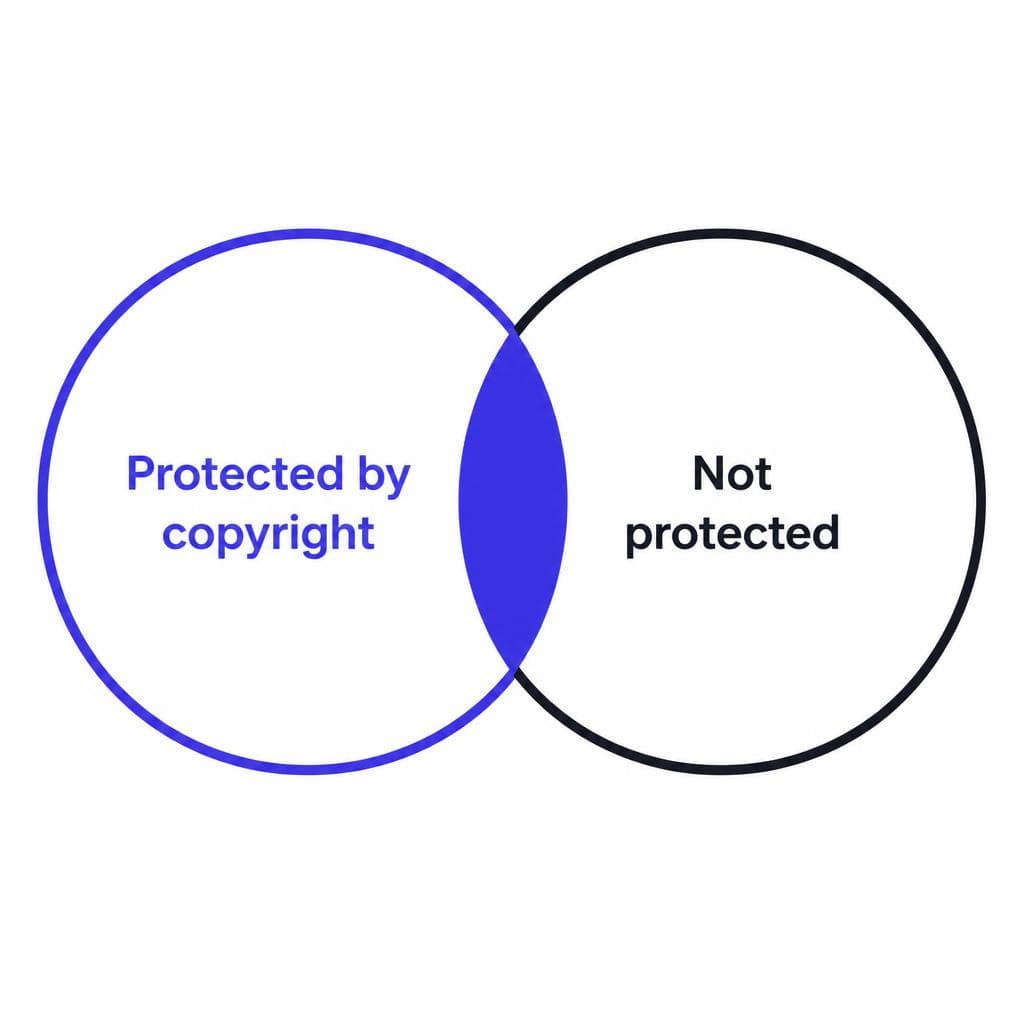
What Copyright Does Not Automatically Protect
Ideas, style, and functional conventions are not the same as a copied file
Copyright does not protect every visual similarity. It generally does not give someone ownership over broad typographic ideas such as “a geometric sans serif,” “a narrow blackletter,” “a 1970s disco style,” or “a handwritten café-menu look.” Nor does it usually protect standard construction choices that are common to an era, genre, or functional alphabet. Two designers may independently make rounded monoline letters, high-contrast serifs, or condensed capitals without one necessarily infringing the other.
This principle matters because readers often ask about font IP AI as if any generated output that resembles an existing style must be unlawful. Resemblance may be relevant, but it is not the whole analysis. A tool that creates an original set of glyphs inspired by broad characteristics is different from a process that reproduces the distinctive outlines, spacing, and character set of a specific proprietary font. Likewise, saying “make it look exactly like [Font Name]” carries more risk than describing observable, general features such as “high x-height, soft terminals, low contrast, and compact spacing.”
Names are a separate issue. Even where typeface shapes have limited copyright protection, using another company’s font name to market your own product can lead to trademark, false-designation, or consumer-confusion concerns. Calling a generated font “Helvetica AI,” for example, is a much different choice from calling it “Metro Grotesk” while accurately describing its characteristics. Avoid using a protected or established family name in a way that implies endorsement, origin, or compatibility when that is not true.
Finally, a publicly visible font is not necessarily free to reuse. Seeing letters in a logo, book cover, website, or social post does not tell you whether the original font was licensed, whether the designer created it custom, or whether the font is subject to additional design protections. Public visibility is not permission.
The Letterform Distinction: Typeface Design vs. Font Software
Why this difference changes the answer to “AI recreate font legal?”
A useful way to think about font law AI tools is to separate the appearance of an alphabet from the mechanism used to render it. A typeface design is the visual system: what the letters look like. A font file is the technical implementation: the data that tells a computer how to display and space those letters. In the United States, typeface designs have historically received narrower copyright treatment than font software. Other jurisdictions may offer stronger or different protection for type designs through copyright, registered designs, or related rights.
That distinction explains why reverse-engineering can be risky even when drawing from visual reference may be treated differently. Copying Bézier outlines from a commercial .OTF, tracing glyphs with the goal of creating an interchangeable replacement, or using software to extract the original file’s metrics and tables may implicate protected software and violate a license. Building new glyphs from scratch after studying broad typographic conventions is not automatically the same act—but it is not a universal safe harbor either, especially if the final work is extremely close, marketed as a substitute, or used in a jurisdiction with broader typeface protections.
Consider two examples. First, a designer uses a vintage sign as visual inspiration and creates a limited custom alphabet with new proportions, new terminals, different spacing, and an original name. That project may raise fewer concerns than copying a font file, although the sign itself could still contain protected artwork or branding. Second, a designer uploads a specimen of a current commercial typeface, asks software to reproduce every character, retains nearly identical widths and spacing, and sells the result as a cheaper alternative. Even if the output is technically a newly generated file, the overall facts create much greater legal and commercial risk.
The lesson is not that every similar-looking font is forbidden. It is that the workflow, source material, level of similarity, jurisdiction, licensing terms, and marketing claims all matter. “Generated from an image” describes a technical process; it does not, by itself, resolve ownership or permission.
AI Generation and Originality: Who Owns the Result?
AI font copyright depends on human creative contribution and the tools used
Questions about AI font copyright usually involve two separate issues: whether using the input material is permitted, and whether the resulting output qualifies for copyright protection. These should not be collapsed into one question. A result can be original enough to support some rights while still creating a dispute because of the material it was based on. Conversely, a result may avoid copying any protected source but receive limited copyright protection if there was too little human authorship in its creation.
In the United States, copyright generally requires human authorship. Simply pressing a button and accepting a fully automated output may not establish copyright in the machine-generated portions. However, a human may have protectable rights in their original creative contributions: selecting source material they own or have permission to use, directing the process through meaningful design choices, editing individual glyphs, revising spacing and kerning, building ligatures, choosing an overall character set, and arranging the final work. The legal treatment is evolving, so businesses should keep records of their human decisions rather than assuming that an AI label determines the outcome.
For an AI-generated font, originality is strongest when a person meaningfully shapes the result. For example, a designer might start with their own hand-drawn lettering, generate an initial glyph set, redraw inconsistent characters, create missing punctuation, establish spacing rules, adjust kerning pairs, and test legibility at multiple sizes. That is materially different from asking an AI to reproduce a named commercial font from a specimen image and exporting the first result.
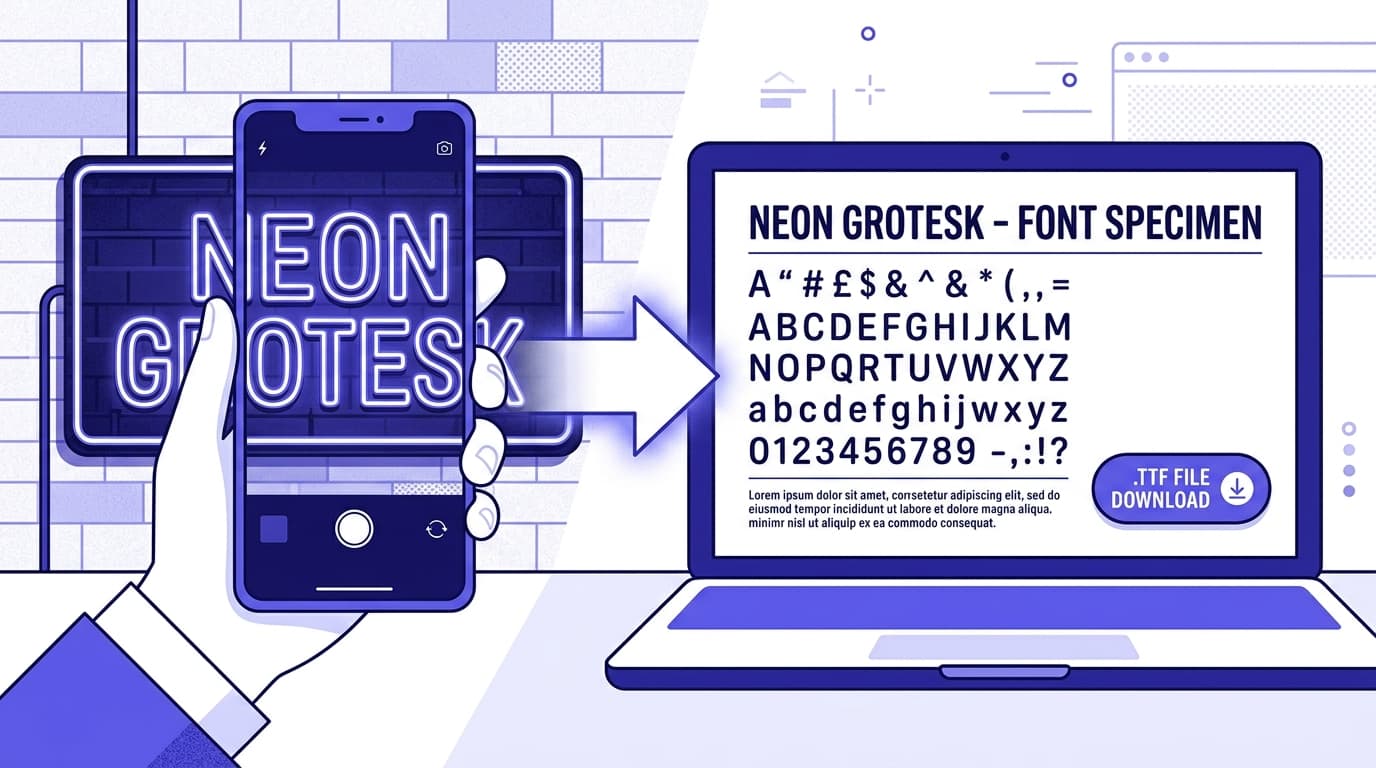
Tool terms matter too. Review the provider’s terms for ownership, commercial rights, restrictions on uploads, and responsibility for content. A responsible image-to-font workflow should begin with artwork you created, public-domain material, or images you are clearly authorized to use. Snapafont can be useful for turning original lettering, sketches, or approved brand assets into an editable downloadable .TTF font file, but the user remains responsible for ensuring that the source image and intended use are lawful.
When teams discuss “is font generation copyright,” the most accurate answer is: potentially, but not automatically, and not necessarily for every part of the result. The more human creative judgment and documented refinement involved, the clearer the authorship story tends to be.
Practical Guidelines for Using AI Font Tools Responsibly
A straightforward risk-reduction checklist
You do not need to avoid AI-assisted typography altogether. You do need a disciplined process. The following practices reduce risk while helping you create fonts that are more distinctive and useful.
First, use clean source material. The best inputs are your own lettering, commissioned artwork with a written assignment or appropriate license, or genuinely public-domain sources. If a client supplies an image, ask them to confirm in writing that they own it or have the authority to authorize font creation. A screenshot of a popular website, a type specimen from a commercial foundry, or a logo from another business should not be treated as free training or reference material.
Second, avoid prompts and briefs centered on exact replication. Instead of “recreate Font X,” describe the visual goals you need: “a friendly humanist sans with open counters, moderate stroke contrast, rounded dots, and highly legible lowercase.” This gives designers and tools room to produce a distinct result. It also produces better brand work, because a list of functional and aesthetic requirements is more useful than a request to imitate a competitor.
Third, perform a similarity review before release. Compare your font against the reference materials that influenced it, paying close attention to distinctive glyphs such as R, G, Q, a, g, &, 1, and 4. Review widths, terminal shapes, joins, spacing, alternate characters, and the overall rhythm of text. If it appears to be a close substitute for one identifiable font, revise it substantially or seek legal advice. A reverse-image search and a comparison with fonts already used in your industry can reveal accidental overlap.
Fourth, document the project. Save original sketches, upload permissions, design iterations, edit histories, contracts, and the date of creation. Documentation will not cure infringement, but it can help establish independent development and identify the human contribution to an AI-assisted result. For agencies, add a font-rights checkpoint to the project handoff process alongside stock-photo and music-license checks.
Fifth, do not reuse protected names. Give the font an original, searchable family name and verify that it does not conflict with a well-known typeface or brand in the markets where you plan to operate. If you distribute the font, include a clear license explaining whether users may install, modify, embed, or redistribute it.
Finally, scale your diligence to your risk. A one-off personal invitation and a global app launch are not equivalent. For a font used in a product, national campaign, merchandise line, or licensing business, have counsel review the source materials, generated output, naming, and end-user license. This is especially important across borders, where font intellectual property rights may differ significantly.
Create a Font From Work You Have the Right to Use
AI can make font creation more accessible, but the safest and most rewarding use case is still the clearest one: start with lettering or artwork you created or are authorized to use, then make thoughtful design decisions as you turn it into a working typeface.
If you have an original sketch, hand-lettered logo concept, classroom project, or approved brand asset, try Snapafont at snapafont.com to convert it into a downloadable .TTF font file. Review the output, refine the characters that matter most, test it in real words and layouts, and keep a record of your source material and edits. That approach gives you a practical path from image to font while respecting the legal and creative boundaries that make typography sustainable.
Ready to turn your image into a font?
Upload any image and get a real, downloadable .TTF font file in seconds.
Try Snapafont Free →